

Test
Test

This read-aloud version was created using an AI voice.
Harald: Was ist eigentlich so schön am Fahrradfahren? Wolfgang, was findest du eigentlich am Fahrradfahren besonders schön?
Wolfgang: Dazu, oh, dazu muss ich sagen, fahr nicht einfach Fahrrad, ich fahr ein E-Bike.
Harald: Ach, Alter ist hier recht.
Wolfgang: Genau, genau. Man kann einfach äh...
Harald: Halt! Ach ja, hatte vergessen, meine Kopfhörer aufzusetzen. Also du fährst E-Bike.
Wolfgang: Genau.
Harald: Wenn ich ehrlich bin, Wolfgang, wenn...
Wolfgang: Wir sind noch nicht soweit.
Harald: Doch, ohne E-Bike würde die Fahrradtour mit dir nicht durchstehen.
Wolfgang: Ja, dazu muss man sagen, ich bin früher schon 30 Kilometer am Tage gefahren. Und mit dem E-Bike ist dit eben äh, is gut für die Gelenke, aber da erleichtert viel. Ne? Gerade wenn Wind ist order Steigungen and so weiter, zumindest kann man beim E-Bike die Natur noch mehr genießen.
Harald: Ach so, du erzählst jetzt von vor 50 Jahren.
Wolfgang: Nee, so lange ist das noch nicht her. Das ist erst fünf Jahre her.
Harald: Fünf Jahre, yeah. Yeah, bei mir ist ähnlich. Also only E-Bike gehts nicht. But it geht ja nicht darum, welches Fahrrad wir fahren, or with welcher Unterstützung. It geht ja mehr darum, what we beide da gemeinsam erleben unterwegs.
Wolfgang: Tja, man muss auch mal nach rechts und links gucken, die Schallklappen abnehmen, nicht bloß auf den Fahrrad fahren konzentrieren, sondern was links und rechts vom Weg zu sehen ist.
Harald: That Uh-huh. haelt mir was ein. Wolfgang, du bist ja typisch dafuer. Uh normale Radtouren, wie sie von anderen Anbietern angeboten werden, wenn wir davon Teilstrecken nehmen, du weisst immer irgendeine Ecke wo's noch schoen ist, wo 'ne Bank steht or uh true you know, auch irgendwie ne ruhige schoene Ecke. Kannst du dich dran erinnern where we the uh Kollegen getroffen haben, der in der nach Potsdam wollte, unten an der Bank.
Wolfgang: Ja, das ist eine besonders schöne Ecke. Ist von Busco. Wenn man von Busco gerade runter fährt, kommt man zu einer Badestelle. Ein bisschen äh ab von der Fahrradstraße nach Voskrau. Ungefähr in der Mitte von Voskrau und Tresco. Sehr schön. Ja, und schon hatten wir einen neugierigen Fahrradfahrer getroffen, der kam aus Potsdam und hat hier versucht in europäischen Wege zu finden. And genauso machen wir das auch. Ja, and einfach mal fahren uh and neue Wege entdecken. Einfach von den eingetretenen Spuren abweichen. Neue Spuren legen. Und dafür uh Fahren wir endlich Fahrrad, immer wieder was Neues entdecken. Man fährt durch den Wald, mit immer geht der Wald auf, eine Lichtung und da ist ein Teich und da kann man sich niederlassen und keiner weiß wo der ist außer ich.
Harald: Ja, und jetzt natürlich unsere Hörer. Mir fällt dabei noch ein, als wir da unten auf der Bank gesessen haben und uns mal nicht unterhalten haben, du hast die Blätter rauschen gehört, du hast die Vögel zwitschern gehört. ist doch herrlich, du kommst doch vollkommen runter. And what I also would like to say, that it was really just eighty or hundred metre up from the radweg.
Wolfgang: Ganz genau.
Harald: Mm-hmm.
Wolfgang: Yeah, and what Harald just even just said with the birds and rushing Fühle und die Ruhe da zu sehen, es kommt immer ganz darauf an, wann man fährt. Also die besten Fahrradtouren für mich selber oder für Manni müht oder sagen wir mal, die die Seele streicheln ist morgens und vielleicht in den späteren Abendstunden im Sommer, solange es hell ist.
Harald: Ja, deswegen treffen wir uns ja immer in Europien an der See-Promenade auf unserer Bank um sieben Uhr. Dann essen wir eine Banane und nehmen einen kleinen Energiedrink auf und dann geht's los. Da sind wir bei dem Punkt, we're überlegen uns eigentlich die Radtour nicht, wir fahren einfach los.
Wolfgang: Ja, zum Anfang mussten wir schon ein bisschen äh Die Strecken fahren, die mir hier schon bekannt waren, damit sich äh der Harald auch ein bisschen auskennt. Sonst könnte der dat ja nicht machen with den Prospekten und wat wir so nebenbei machen or or dat ma zu erzählen. Yeah, but but mittlerweile. Sagt er auch mal, Wolfgang, guck mal den Weg, bis den schon gefahren. Nee, dann fahren wir da hin und dann entdecken wir wieder was Neues.
Harald: Ja, and I have, I have been living here since 2014 in Neuropin and uh the routes that we have driven here, yeah, especially down by the lake, Altfriesack, our most beautiful area for me, I didn't even know that there are such corners here. I thought my Neuropin. Ropina ist trostlos. Aber man muss eben raus, ne? Das ist das Schöne daran. Oh,
Wolfgang: Ja, und was viele nicht wissen, und Harald wusste das auch nicht, eines Tages haben wir uns da unten am See wieder getroffen, und da habe ich ihm eröffnet, heute besuchen wir die Ruppiner Schweiz.
Harald: ich dachte Schweiz, da bin ich 2014 hergekommen aus der Schweiz. Ich dachte, ich bin befreit von der Schweiz, aber dann. Opina Schweiz? Interessant. Schön.
Wolfgang: So.
Harald: Ah. Yeah, I can me now dran erinnern. Beutenmühle unten. Da waren wir so früh und wollten unbedingt einen Kaffee trinken. And then bis du dahin gegangen zu der Kellnerin and has gefragt, of die schon offen ham. Die hatten noch nicht offen. The Kellnerin had uns but trotzdem Kaffee gebracht. Und das Schöne, als wir bezahlen wollten, hat sie gesagt, geht aufs Haus. Also wunderbar.
Wolfgang: Ja,
Harald: Und der Teich da oben, ich wollte dich jetzt nicht unterbrechen, aber der Teich oben in Beudenmühle, das ist natürlich schön da.
Wolfgang: ja. Die Kellnerin erstmal sehr freundlich und, äh, wenn ich nach Beutemühle fahre, dann kann ich mich immer erinnern an Dreißig Jahre vorher, Beutel Müller war immer ein Ausflugsheil Ausflugsziel für Männer am Herrentag. Ah damals war dort bloß eine Glashütte, wenn man sich dort vorstellen kann, aus Glass gebaut, wie eine Wagshaus, and mittendurch ging der Bienenbach. Oh, da sollte eigentlich Geld reingeworfen werden, aber da sind meistens die Männer hier landet am Nachmittag.
Harald: Ja, dit is klar. Himmelfahrt und Männer unterwegs, ja. Äh aber was ich dann auch interessant fand, uh ist draußen die dieses Mühlenrad. Diese Größe. Auch übrigens bevor wir's vergessen, ja, wer da Interesse hat auf unser uh Website, da könnt ihr die Bilder uh euch angucken unter Bilderbuch und ihr findet die G_P_S_ Daten. Egal wo ihr aussteigt, ihr fahrt einfach mit mit eurem Fahrrad uh mit'n Zug nach Neuruppin Rheinsberger Tor, oder Neuruppin West. give ein wo ihr hinwollt von unserer Radstrecke and ihr werdet dahin von unserem System aus dahin geleitet. Unsere Strecken sind beidseitig befahrbar, so it's egal oh from where you the Strecken befahren wollt. Nur so weit. You wanted to say something, right?
Wolfgang: Ja, dazu muss ich noch sagen, hatte gerade davon geredet, vor dreissig Jahren und so, äh, and the Dänen von Der Wohnbauer Mühler hat damals der Bauunternehmer Katsch gekauft, da wurde saniert. Ja, auch mit dem Mühlenrad, das wurde alles neu gemacht, und äh für Leute, die die Gegend da entfernt sind, gibt auch viele Wanderwege and deswegen hat the Herr Katsch da auch eine Pension eingerichtet. Man kann da übernachten, das Essen is good, die Terrasse is very schön, für Kinder is a Spielplatz da und ein kleiner Tierpark mit Eseln and kleinen Pferden.
Harald: Ja ja, jetzt hast du so viel vom Katsch erzählt, dann werden wir ihm mal den Bei dem Postkartenschicken vielleicht will ihn möchte er sich unter uns unterstützen. Das sind wir beim Thema. Wir machen ja da alle äh kostenfrei für jeden. Wir haben uns überlegt, uh es gibt viele Anbieter von Radtouren, aber uh erstmal muss man sich registrieren. And when man in a new shootin' road tour findet, then must one that for uh
Wolfgang: Mm.
Harald: mm.
Wolfgang: Mm.
Harald: Profi Account gründen und 14.19er im Monat abbuchen ist bei uns nicht. Wir wollen jeden der Lust am Fahrradfahren hat, ermöglichen ohne Kosten Radtouren Radtouren, Entschuldigung, uh Radtouren zu entdecken. Yeah, that is unser Anliegen dabei. Und so wird's auch bleiben.
Wolfgang: Genau.
Harald: Yo. Bloß weil du den Herrn Katsch jetzt so hoch gelobt hast, deswegen wollte ich mal sagen, wir schicken ihm einfach unseren Podcast. And yeah, so once more we have kind of like ferry.
Wolfgang: Nee, der Herr Katsch ist ja nicht der Einzigste. Wenn ich mit, drauf überlege, seitdem ich mit Haaren zusammen bin, fallen mir erst mal fallen mir lauter schöne Ecken ein, die ich schon lange nicht mehr angefahren habe. And da sind auch Gaststätten oder Pensionen bei, die man im Laufe der Jahre kennengelernt hat and uh Wir würden auf für Freunde des Radfahrens von außerhalb eben die Pensionen oder so was mit reinnehmen in unsere Seite, ja, damit man auch weiß, wo man eben, wenn man mal ein verlängertes Wochenende hier bleiben will, in dem schönen Neuropin, eigentlich die schöne Stadt, die schöne Fontane-Stadt, so habe ich sie immer genannt.
Harald: Ja, Schinkel hat da auch, uh, der ist da geboren worden. Ah, Schinkel ist ja bekannt, natürlich nur durch Bauwerke. Werke nicht nur, but through the most Bauwerke in Berlin. Yeah, yet failin' us the water, no.
Wolfgang: Nah uh you can d uh no, but also say, in the future when we might so far it is or something, then you can uh can if you from outside come, for example, the Brandenburger Tor come. I by the information Perspektiven von uns.
Harald: And then if they don't fall, or there is still five hundred stick from us, where uh where they are everything from us.
Wolfgang: I think the demand will rise because the cyclists are getting more and more. So one has to keep your eyes open when you're cycling. In the past when I rode a bike, mm percentage-wise it could be twenty, thirty percent. I think now we're at eighty percent.
Harald: Fahrrad fahren.
Wolfgang: Ja.
Harald: Naja, auch nicht nur die zur Arbeit fahren, sondern auch in der Freizeit Fahrrad fahren
Wolfgang: Okay.
Harald: wird benutzen.
Wolfgang: Man sieht's ja, man sieht's ja an uns beiden, es gibt ja auch rüstige Rentner.
Harald: Ja, ja, noch noch. Gut. Äh, mir fällt jetzt noch ein, nee, jetzt ist es wieder weg, aber das liegt am Alter. So. Da können wir jetzt einen Schnitt machen und
Wolfgang: Ja.
Harald: müssen uns erst wieder neu orientieren.
Wolfgang: Und das nächste Mal wieder was Neues und mehr.
Harald: Genau, von uns beiden. Wir
Wolfgang: Genau.
Harald: hoffen, es hat euch gefallen. Und wenn ihr Anregungen habt oder Kritik, auch negative Kritik, dann schreibt uns einfach eine E-Mail.
Wolfgang: Ja, und das Schönste wäre, wenn wir mal wieder fahren und euch treffen.
Harald: Well now, we are then to again.
Wolfgang: We have th desirable T-shirts with our emblem.
Harald: And. ratten. minus O_P_R_ dot D_E_
Wolfgang: Well now.
Harald: Okay, until next time.
Wolfgang: Cheers.
Harald: Cheers.
Wolfgang: Ciao ciao.
Harald: What is it that makes cycling so enjoyable? Wolfgang, what do you particularly enjoy about cycling?
Wolfgang: Well, I have to say, I don't just ride a bicycle—I ride an e-bike.
Harald: Well, age does matter here.
Wolfgang: Exactly, exactly. You can simply, uh...
Harald: Wait! Oh yes, I forgot to put on my headphones. So, you ride an e-bike.
Wolfgang: Exactly.
Harald: To be honest, Wolfgang, if...
Wolfgang: We're not there yet.
Harald: Actually, without an e-bike I wouldn't make it through a bike tour with you.
Wolfgang: Yes, I have to say, I used to ride 30 kilometres a day. And with an e-bike, well, it's easier on the joints and makes things a lot less strenuous. Right? Especially when there's wind or hills and so on. At least with an e-bike you can enjoy nature even more.
Harald: Oh, so now you're talking about 50 years ago.
Wolfgang: No, it wasn't that long ago. It was only five years ago.
Harald: Five years, yeah. Yeah, it's similar for me. So it isn't only about e-bikes. But it isn't about which bicycle we ride, or how much assistance we use. It's more about what the two of us experience together along the way.
Wolfgang: You also have to look to the right and left, take off your headphones, and not focus solely on cycling, but also notice what there is to see on either side of the path.
Harald: That—uh-huh. That reminds me of something. Wolfgang, you're a typical example of that. On normal cycling tours offered by other providers, if we use parts of those routes, you always know some spot that is especially beautiful, where there's a bench or, well, some quiet and lovely corner. Do you remember where we met the, uh, colleague who was heading to Potsdam, down by the bench?
Wolfgang: Yes, that's a particularly beautiful spot. It's near Busco. If you ride straight down from Busco, you come to a bathing area, a little way off the cycle path to Voskrau—roughly halfway between Voskrau and Tresco. Very beautiful. And that's where we met a curious cyclist who had come from Potsdam and was trying to find his way along the European routes here. That's exactly what we do, too: simply ride along and discover new paths. Deviate from the well-worn tracks and make new ones. That's why we ride bicycles—to keep discovering something new. You ride through the forest, and suddenly it opens into a clearing with a pond, where you can sit down, and nobody knows where it is except me.
Harald: Yes, and now, of course, our listeners. That reminds me of something else: when we were sitting on the bench down there and weren't talking for once, you could hear the leaves rustling and the birds singing. It's wonderful—you completely unwind. And what I would also like to say is that it was only about eighty or a hundred metres from the cycle path.
Wolfgang: Exactly.
Harald: Mm-hmm.
Wolfgang: Yeah, and what Harald just said about the birds, the rustling leaves and the tranquillity: it always depends on when you ride. For me, the best cycling tours—or the ones that really soothe the soul—are in the morning and perhaps in the late evening during summer, as long as it is still light.
Harald: Yes, that's why we always meet in Europien at the lakeside promenade, on our bench, at seven o'clock. Then we eat a banana, have a small energy drink, and set off. That brings us to the point: we don't actually plan the cycling tour—we simply set off.
Wolfgang: Yes, at first we did have to ride a few routes that were already familiar to me, so that the Haraldcould get to know the area a little, too. Otherwise he couldn't put together the brochures or talk about what we do on the side. But by now he sometimes says, Wolfgang, look at this path—we've already ridden that one. No, then we go this way and discover something new again.
Harald: Yes, and I have been living here in Neuropin since 2014. Of all the routes we have ridden here, especially around the lake and Altfriesack, that is the most beautiful area for me. I didn't even know there were places like that here. I thought Neuropin—Ropina—was bleak. But you have to get out and explore, don't you? That's the beauty of it. Oh,
Wolfgang: Yes, and what many people don't know—and Haralddidn't know either—is that one day we met again down by the lake, and I told him: today we're visiting the Ruppiner Schweiz.
Harald: I thought, Switzerland? I came here from Switzerland in 2014. I thought I had left Switzerland behind, but then—Ruppiner Schweiz? Interesting. Beautiful.
Wolfgang: So.
Harald: Ah, yes, I remember that now. Beutenmühle, down there. We were there very early and really wanted to have a coffee. Then you went over to the waitress and asked whether they were already open. They weren't open yet, but the waitress brought us coffee anyway. And the best part was that when we wanted to pay, she said, 'It's on the house.' Wonderful.
Wolfgang: Yes,
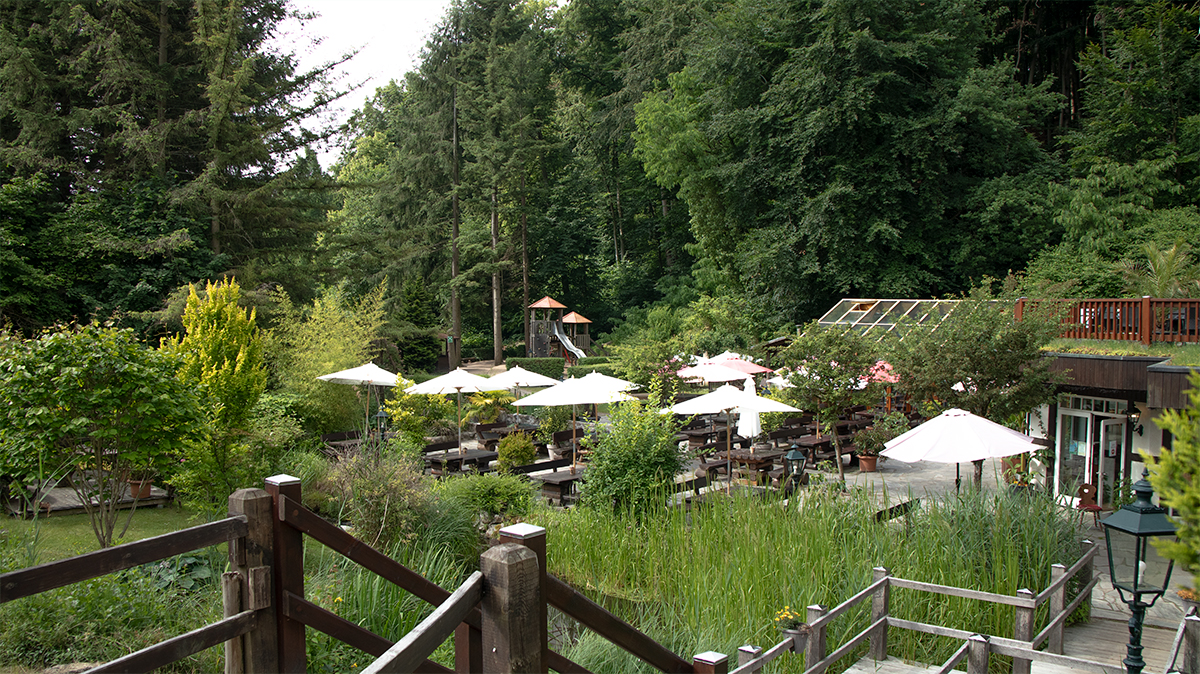
Harald: And the pond up there—I didn't want to interrupt you—but the pond above Beudenmühle is naturally beautiful, too.
Wolfgang: Yes. The waitress was very friendly, and whenever I ride to Beutemühle, I remember what it was like 30 years ago. Beutel Müller was always a popular destination for men on Men's Day. Back then there was only a glassworks, if you can imagine it: a glass building shaped like a wagon shed, with the Bienenbach running right through it. People were supposedly meant to throw money into it, but by the afternoon it was usually the men who had ended up there.
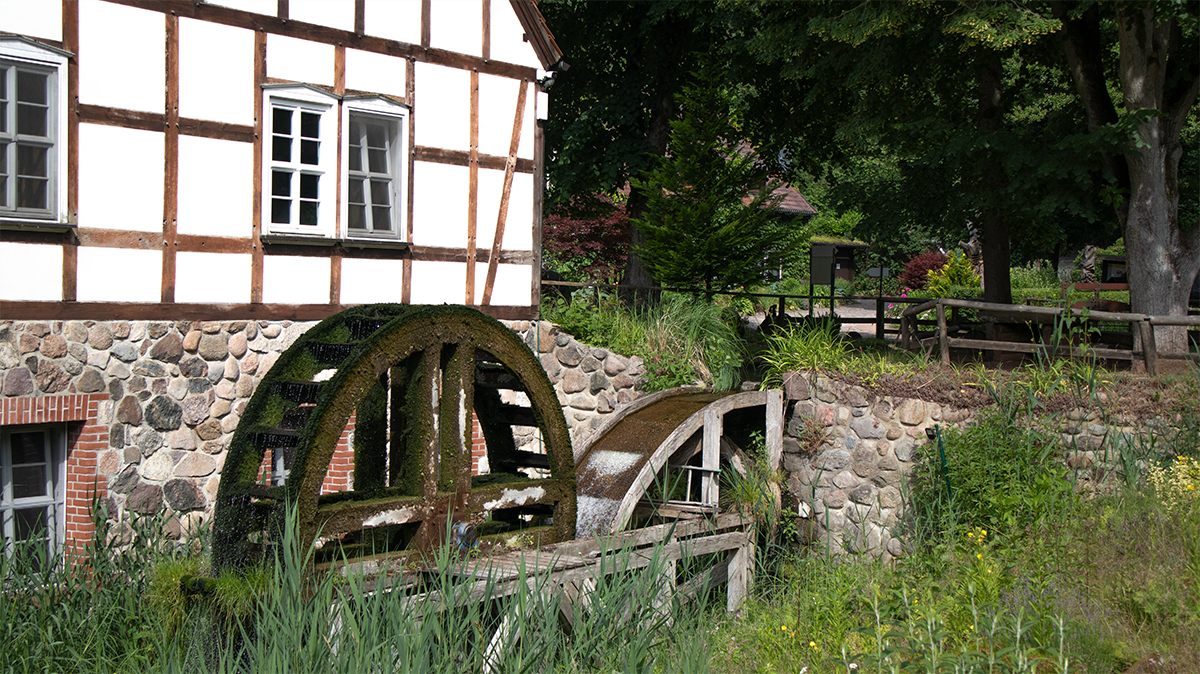
Harald: Yes, that figures—Ascension Day and men out together. But what I also found interesting was the mill wheel outside, its size. And, before we forget: if you are interested in our website, you can look at the pictures under Bilderbuch, and you will find the G_P_S_ data there. Wherever you get off, you can simply take your bicycle by train to Neuruppin Rheinsberger Tor or Neuruppin West, enter where you want to go from our cycle route, and our system will guide you there. Our routes can be ridden in both directions, so it doesn't matter from which end you want to ride them. That's all for now. You wanted to say something, didn't you?
Wolfgang: Yes, I should add something. I was just talking about 30 years ago and so on. The Dänen of Der Wohnbauer Mühler was bought by the building contractor Katsch back then and then renovated. The mill wheel was also rebuilt completely. For people travelling from further afield, there are many hiking trails in the area, which is why Mr Katsch also set up a guesthouse there. You can stay overnight, the food is good, the terrace is very beautiful, there is a playground for children and a small animal park with donkeys and ponies.
Harald: Yes, yes, you've said so much about Katsch now that perhaps we should send him a postcard—maybe he would like to support us. That brings us to the subject. We make everything free of charge for everyone. We realised that there are many providers of cycling tours, but first you have to register. And when you find a new cycling tour, you then have to
Wolfgang: Mm.
Harald: Mm.
Wolfgang: Mm.
Harald: create a professional account, with 14.19 euros deducted each month. That's not how it works with us. We want everyone who enjoys cycling to be able to discover cycling tours at no cost. Sorry—cycling tours. Yes, that's what matters to us, and that's how it will stay.
Wolfgang: Exactly.
Harald: Yo. Just because you've praised Mr Katsch so highly, I thought I'd say that we'll simply send him our podcast. And yes, once again we have a kind of ferry.
Wolfgang: No, Mr Katsch isn't the only one. When I think about it, since I started riding with , I have remembered all sorts of beautiful places that I haven't visited by bicycle for a long time. Some of them also have restaurants or guesthouses that we got to know over the years. And we would include those guesthouses and similar places on our website for cycling enthusiasts from outside the area, so that they know where they can stay if they want to spend a long weekend here in beautiful Neuropin, the beautiful Fontane town—as I have always called it.
Harald: Yes, Schinkel was born there, too. Schinkel is well known, of course, mainly for his buildings—not just any buildings, but some of the most famous buildings in Berlin. Yes, yet failin' us the water, no.
Wolfgang: No, you can't—well, you can also say that in the future, when we get that far or something, people coming from outside—for example, to the Brandenburg Gate—will be able to get information and perspectives from us.
Harald: And then, if they don't fall, there are still five hundred metres from us where everything from us is located.
Wolfgang: I think demand will increase because there are more and more cyclists. So you have to keep your eyes open when you're cycling. In the past, when I rode a bicycle, percentage-wise it might have been twenty or thirty per cent. I think we're at eighty per cent now.
Harald: Cycling.
Wolfgang: Yes.
Harald: Well, not only people cycling to work, but also those who cycle in their free time
Wolfgang: Okay.
Harald: will use it.
Wolfgang: You can see it in the two of us—there are also some pretty fit pensioners.
Harald: Yes, yes, still. Well, something else just occurred to me—no, it's gone again, but that's age for you. So we can make a cut here and
Wolfgang: Yes.
Harald: will have to find our bearings again from scratch.
Wolfgang: And next time, something new and more.
Harald: Exactly, from both of us. We
Wolfgang: Exactly.
Harald: hope you enjoyed it. And if you have any suggestions or criticism—even negative criticism—just send us an email.
Wolfgang: Yes, and the best thing would be to ride again sometime and meet you.
Harald: Well, now we're going to do it again.
Wolfgang: We have the desirable T-shirts with our emblem.
Harald: And. ratten. minus O_P_R_ dot D_E_
Wolfgang: Well, now.
Harald: Okay, until next time.
Wolfgang: Cheers.
Harald: Cheers.
Wolfgang: Bye-bye.
Read podcast transcript
Harald: What is it that makes cycling so enjoyable? Wolfgang, what do you particularly enjoy about cycling?
Wolfgang: Well, I have to say, I don't just ride a bicycle—I ride an e-bike.
Harald: Well, age does matter here.
Wolfgang: Exactly, exactly. You can simply, uh...
Harald: Wait! Oh yes, I forgot to put on my headphones. So, you ride an e-bike.
Wolfgang: Exactly.
Harald: To be honest, Wolfgang, if...
Wolfgang: We're not there yet.
Harald: Actually, without an e-bike I wouldn't make it through a bike tour with you.
Wolfgang: Yes, I have to say, I used to ride 30 kilometres a day. And with an e-bike, well, it's easier on the joints and makes things a lot less strenuous. Right? Especially when there's wind or hills and so on. At least with an e-bike you can enjoy nature even more.
Harald: Oh, so now you're talking about 50 years ago.
Wolfgang: No, it wasn't that long ago. It was only five years ago.
Harald: Five years, yeah. Yeah, it's similar for me. So it isn't only about e-bikes. But it isn't about which bicycle we ride, or how much assistance we use. It's more about what the two of us experience together along the way.
Wolfgang: You also have to look to the right and left, take off your headphones, and not focus solely on cycling, but also notice what there is to see on either side of the path.
Harald: That—uh-huh. That reminds me of something. Wolfgang, you're a typical example of that. On normal cycling tours offered by other providers, if we use parts of those routes, you always know some spot that is especially beautiful, where there's a bench or, well, some quiet and lovely corner. Do you remember where we met the, uh, colleague who was heading to Potsdam, down by the bench?
Wolfgang: Yes, that's a particularly beautiful spot. It's near Busco. If you ride straight down from Busco, you come to a bathing area, a little way off the cycle path to Voskrau—roughly halfway between Voskrau and Tresco. Very beautiful. And that's where we met a curious cyclist who had come from Potsdam and was trying to find his way along the European routes here. That's exactly what we do, too: simply ride along and discover new paths. Deviate from the well-worn tracks and make new ones. That's why we ride bicycles—to keep discovering something new. You ride through the forest, and suddenly it opens into a clearing with a pond, where you can sit down, and nobody knows where it is except me.
Harald: Yes, and now, of course, our listeners. That reminds me of something else: when we were sitting on the bench down there and weren't talking for once, you could hear the leaves rustling and the birds singing. It's wonderful—you completely unwind. And what I would also like to say is that it was only about eighty or a hundred metres from the cycle path.
Wolfgang: Exactly.
Harald: Mm-hmm.
Wolfgang: Yeah, and what Harald just said about the birds, the rustling leaves and the tranquillity: it always depends on when you ride. For me, the best cycling tours—or the ones that really soothe the soul—are in the morning and perhaps in the late evening during summer, as long as it is still light.
Harald: Yes, that's why we always meet in Europien at the lakeside promenade, on our bench, at seven o'clock. Then we eat a banana, have a small energy drink, and set off. That brings us to the point: we don't actually plan the cycling tour—we simply set off.
Wolfgang: Yes, at first we did have to ride a few routes that were already familiar to me, so that the Haraldcould get to know the area a little, too. Otherwise he couldn't put together the brochures or talk about what we do on the side. But by now he sometimes says, Wolfgang, look at this path—we've already ridden that one. No, then we go this way and discover something new again.
Harald: Yes, and I have been living here in Neuropin since 2014. Of all the routes we have ridden here, especially around the lake and Altfriesack, that is the most beautiful area for me. I didn't even know there were places like that here. I thought Neuropin—Ropina—was bleak. But you have to get out and explore, don't you? That's the beauty of it. Oh,
Wolfgang: Yes, and what many people don't know—and Haralddidn't know either—is that one day we met again down by the lake, and I told him: today we're visiting the Ruppiner Schweiz.
Harald: I thought, Switzerland? I came here from Switzerland in 2014. I thought I had left Switzerland behind, but then—Ruppiner Schweiz? Interesting. Beautiful.
Wolfgang: So.
Harald: Ah, yes, I remember that now. Beutenmühle, down there. We were there very early and really wanted to have a coffee. Then you went over to the waitress and asked whether they were already open. They weren't open yet, but the waitress brought us coffee anyway. And the best part was that when we wanted to pay, she said, 'It's on the house.' Wonderful.
Wolfgang: Yes,
Harald: And the pond up there—I didn't want to interrupt you—but the pond above Beudenmühle is naturally beautiful, too.
Wolfgang: Yes. The waitress was very friendly, and whenever I ride to Beutemühle, I remember what it was like 30 years ago. Beutel Müller was always a popular destination for men on Men's Day. Back then there was only a glassworks, if you can imagine it: a glass building shaped like a wagon shed, with the Bienenbach running right through it. People were supposedly meant to throw money into it, but by the afternoon it was usually the men who had ended up there.
Harald: Yes, that figures—Ascension Day and men out together. But what I also found interesting was the mill wheel outside, its size. And, before we forget: if you are interested in our website, you can look at the pictures under Bilderbuch, and you will find the G_P_S_ data there. Wherever you get off, you can simply take your bicycle by train to Neuruppin Rheinsberger Tor or Neuruppin West, enter where you want to go from our cycle route, and our system will guide you there. Our routes can be ridden in both directions, so it doesn't matter from which end you want to ride them. That's all for now. You wanted to say something, didn't you?
Wolfgang: Yes, I should add something. I was just talking about 30 years ago and so on. The Dänen of Der Wohnbauer Mühler was bought by the building contractor Katsch back then and then renovated. The mill wheel was also rebuilt completely. For people travelling from further afield, there are many hiking trails in the area, which is why Mr Katsch also set up a guesthouse there. You can stay overnight, the food is good, the terrace is very beautiful, there is a playground for children and a small animal park with donkeys and ponies.
Harald: Yes, yes, you've said so much about Katsch now that perhaps we should send him a postcard—maybe he would like to support us. That brings us to the subject. We make everything free of charge for everyone. We realised that there are many providers of cycling tours, but first you have to register. And when you find a new cycling tour, you then have to
Wolfgang: Mm.
Harald: Mm.
Wolfgang: Mm.
Harald: create a professional account, with 14.19 euros deducted each month. That's not how it works with us. We want everyone who enjoys cycling to be able to discover cycling tours at no cost. Sorry—cycling tours. Yes, that's what matters to us, and that's how it will stay.
Wolfgang: Exactly.
Harald: Yo. Just because you've praised Mr Katsch so highly, I thought I'd say that we'll simply send him our podcast. And yes, once again we have a kind of ferry.
Wolfgang: No, Mr Katsch isn't the only one. When I think about it, since I started riding with , I have remembered all sorts of beautiful places that I haven't visited by bicycle for a long time. Some of them also have restaurants or guesthouses that we got to know over the years. And we would include those guesthouses and similar places on our website for cycling enthusiasts from outside the area, so that they know where they can stay if they want to spend a long weekend here in beautiful Neuropin, the beautiful Fontane town—as I have always called it.
Harald: Yes, Schinkel was born there, too. Schinkel is well known, of course, mainly for his buildings—not just any buildings, but some of the most famous buildings in Berlin. Yes, yet failin' us the water, no.
Wolfgang: No, you can't—well, you can also say that in the future, when we get that far or something, people coming from outside—for example, to the Brandenburg Gate—will be able to get information and perspectives from us.
Harald: And then, if they don't fall, there are still five hundred metres from us where everything from us is located.
Wolfgang: I think demand will increase because there are more and more cyclists. So you have to keep your eyes open when you're cycling. In the past, when I rode a bicycle, percentage-wise it might have been twenty or thirty per cent. I think we're at eighty per cent now.
Harald: Cycling.
Wolfgang: Yes.
Harald: Well, not only people cycling to work, but also those who cycle in their free time
Wolfgang: Okay.
Harald: will use it.
Wolfgang: You can see it in the two of us—there are also some pretty fit pensioners.
Harald: Yes, yes, still. Well, something else just occurred to me—no, it's gone again, but that's age for you. So we can make a cut here and
Wolfgang: Yes.
Harald: will have to find our bearings again from scratch.
Wolfgang: And next time, something new and more.
Harald: Exactly, from both of us. We
Wolfgang: Exactly.
Harald: hope you enjoyed it. And if you have any suggestions or criticism—even negative criticism—just send us an email.
Wolfgang: Yes, and the best thing would be to ride again sometime and meet you.
Harald: Well, now we're going to do it again.
Wolfgang: We have the desirable T-shirts with our emblem.
Harald: And. ratten. minus O_P_R_ dot D_E_
Wolfgang: Well, now.
Harald: Okay, until next time.
Wolfgang: Cheers.
Harald: Cheers.
Wolfgang: Bye-bye.